Questions about marketing operations and organisation design
What are the seven wastes most often found in marketing departments?
Sandra Vollrath, who is Lean Six Sigma trained, says process audits almost always find the same seven: underused systems, brand risk, strategy misalignment, unnecessary meetings, interruptions, manual reporting, and lag while waiting for approvals. Brand risk includes different team members using different tones or outdated logos. She recommends service level agreements for approvals, for example 24 to 48 hours, and asking whether everyone invited to a meeting really needs to be there. Hear the full discussion in episode 82
What is agile marketing and how does it help teams do more with less?
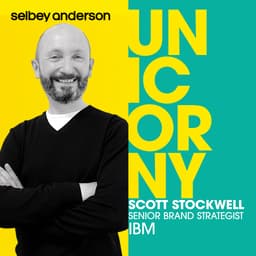
IBM's Scott Stockwell describes agile as a set of principles, practices and tools built around short, time-boxed sprints with a review at the end of each. It keeps two things in focus: value to the customer and constant improvement. Asking what the customer values stops teams doing low-value work, and frequent reviews remove friction from the next cycle. Hear the full discussion in episode 27
How did IBM use pre-prepared content to market the Wimbledon Championships in real time?
Scott Stockwell co-located IBM's team with its advertising and PR agencies and created 'punnets': small, bite-sized pieces of content about 90% prepared before the tournament. The agency built animations for predictable moments like the longest rally or fastest serve, and when one happened, the team added copy and published within moments. Backup animations covered cases where expected moments did not occur, an idea borrowed from fast fashion's undyed 'greige' fabric. Hear the full discussion in episode 39
What can marketers in big companies learn from start-ups?
Emma Kriskinans, VP Global Marketing at Tyk, offers three lessons. Follow the money by understanding where revenue comes from and who holds the budget; find the formula of metrics that drive the business, such as trials, qualified trials, SQLs and closed deals; and remember marketing matters. At Tyk, inbound marketing has directly brought in 75% to 95% of revenue every year for seven years. Hear the full discussion in episode 40
What should in-house marketers want from their agencies?
Duncan Daines, head of engagement at Gama Aviation, says much of the agency model depends on long-tail production, which in-house teams can often do themselves or buy as flexible manpower. What he values is agencies showing him what he cannot see: macro trends, risks and ideas from other industries. Rachel Fairley adds that clients should stop over-valuing category expertise and ask agencies how they solve problems like theirs elsewhere. Hear the full discussion in episode 62
What makes a B2B event worth attending after the pandemic?
Maya Price, SAP's global head of field marketing events, says people no longer attend just because an event is in person. Customers need permission and must bring value back, so an event must balance an enjoyable, creative experience with an agenda that gives attendees a clear takeaway. A cool venue or famous speaker is no longer enough on its own. Hear the full discussion in episode 66
Is B2B marketing really poor quality, as some critics claim?
Dom Hawes argues B2B is not one sector or market, so it cannot be judged as a whole: expertise in animal health pharmaceuticals says little about marketing pensions. He says the true test of marketing is whether the business succeeds and creates value. Lombard International, which markets wealth solutions through banks, advisers and consultancies in many regulated markets, shows how complex and skilled business marketing can be. Hear the full discussion in episode 74
How does Lombard International measure marketing's contribution?
Jamie Gatoff runs a 'ruthlessly pragmatic' commercial marketing team and reports a dashboard to the executive committee monthly. PR is tracked through a media monitoring tool for coverage and sentiment; digital campaigns link to Salesforce to follow engagement from delivery through opens and click-throughs; and video views, forwards, website traffic by market and internal engagement are all measured. Websites are built for each market rather than simply translated. Hear the full discussion in episode 75
Is B2B marketing really bad?
Dom Hawes points out that B2B trade accounts for around half of the global economy and half the FTSE 350 are B2B businesses, so claiming B2B marketing is poor makes little sense. These companies bring products to market every day through pricing, distribution and promotion. He argues critics usually mean advertising, which shows they see marketing as only promotion, and that you should judge marketing by the success of the business. Hear the full discussion in episode 83
What should be standardised globally and what should be left to local event teams?
Maya Price says the message, look and feel, templates, stage design and registration pages can be standardised, which frees local teams from rebuilding the basics. Local teams can then focus on what makes a difference: local agenda content, working with sales to get the right customers in the room, and follow-up. She starts with a standard skeleton, gathers feedback on what does not work and accepts that good enough is often good enough. Hear the full discussion in episode 67
How is Fujitsu restructuring its marketing in Europe?
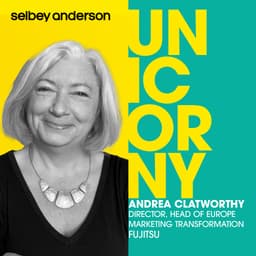
Andrea Clatworthy, Fujitsu's head of Europe marketing transformation, describes a hybrid model rather than pure decentralisation. Big strategic decisions and some teams are centralised at headquarters, while faster decisions are made locally near customers. Headquarters teams are also partly replacing the traditional agency model with an internal, follow-the-sun agency that turns work around overnight. Hear the full discussion in episode 25
How can a B2B business segment a small, niche market without a big research budget?
With a universe of about 100,000 people, Duncan builds segments qualitatively by listening to sales, customer service and delivery teams describe buyer behaviour from first contact to delivery. He has developed around 32 personas that he uses to brief the business, support sales and prepare large government bids. In markets where the business is already on bidder lists, he needs conversion rather than more MQLs. Hear the full discussion in episode 62
How do you balance global consistency with local needs in field marketing?
Maya starts by finding what regions have in common rather than arguing about differences, then provides a shared foundation with roughly 30% leeway to localise. She argues there is no such thing as global branding, only branding: even a 20-person local roundtable must represent the brand consistently, because customers travel and attend events in different countries. Localisation applies to execution, not to the brand. Hear the full discussion in episode 66
How do you run a useful project retrospective?
Scott suggests bringing in someone who was not on the project to run it. One technique is asking each team member to write a tabloid-style headline for what the project was meant to deliver; very different headlines show there was no shared north star. Another is asking people to score out of ten how much they used their 'superpower' on the project; low scores signal the team was not bringing its best. Hear the full discussion in episode 39
How do you build an international marketing team without imposing one culture?
Jamie Gatoff, CMO of Lombard International, follows Ford's 'think global, act local' approach: a global narrative adapted to resonate in each market. With a team where he was until recently the only native English speaker, he summarises and confirms agreements at the end of every meeting to avoid misunderstandings. He built change by finding enthusiastic existing staff to act as advocates, rather than replacing people. Hear the full discussion in episode 74
How should a business prepare for a communications crisis?
Lombard, with support from its private equity owner, built a crisis communications playbook covering media crises, business continuity, IT disaster recovery and pandemics, with a system for rating each crisis and an escalation process. It includes prepared lines to take, media training and local agency contacts, and is tested through war games run with the chief information security officer. Jamie stresses keeping contact lists current, pre-briefing sales colleagues and staying calm, and says a well-handled crisis can strengthen relationships. Hear the full discussion in episode 75
Why might running a side business make you a better marketer?
Sandra says running her yoga studio for five years taught her more than any MBA could, because she handles every part of the business: product, pricing, place, promotion and cash flow. Dom sees a side hustle as a training ground where you can see all of marketing working at small scale and bring the lessons back to your day job. He argues entrepreneurship and marketing are essentially the same thing: taking a business successfully to market. Hear the full discussion in episode 82
What is shadow marketing and why is it risky?
Shadow marketing is when a part of the business feels underserved by the marketing function and hires its own person and budget, usually under a non-marketing job title so it is not absorbed centrally. Andrea says it risks work that is off-brand and off-strategy, and agencies being hired outside preferred supplier processes. Offering strong central tools and support reduces the temptation. Hear the full discussion in episode 25
What is the MoSCoW method for prioritising marketing work?
MoSCoW sorts work into must do, should do, could do and won't do. Once work is sized and prioritised, the must-do row becomes your minimum viable product, which delivers value to the customer quickly and gets early feedback. Scott stresses that teams must be able to say no, and leaders must accept that new requests either replace existing work or wait for the next sprint. Hear the full discussion in episode 27
How do you win over local teams that resist global standards?
Maya pilots new approaches with the people or countries that like change, because others are more willing to adopt what has already succeeded. When a team says something will not work, she asks for specifics, which often shows most of it can work, then collaborates on the rest. She involves people from the start, since nobody likes being told what to do, and notes some global campaigns began as country campaigns, such as one first run in Belgium. Hear the full discussion in episode 67
Differentiation or distinctiveness: which approach is right?
Dom argues it is not either-or. Kotler's segmentation, targeting and positioning (STP) focuses on a segment where you can win and differentiate for it, and suits young, small or disruptive businesses with limited resources. The market-based assets theory, linked to Ehrenberg-Bass work such as How Brands Grow, favours whole-category mental availability through distinctive brand assets and wide distribution, and suits mature categories where products are hard to differentiate. The right mix depends on market maturity, product lifecycle and resources. Hear the full discussion in episode 83
What can start-ups and scale-ups learn from corporate marketers?
Emma says start-ups often overlook brand, while Tyk deliberately made its brand different to stand out in its market. They also need enough process, especially documenting what works in a remote-first business, without adding bureaucracy too early. Finally, change management and internal marketing, such as involving people early and running workshops, help new ideas get adopted rather than ignored. Hear the full discussion in episode 40
How should responsibility for marketing be shared across the executive team?
Dom uses the RACI framework: Responsible, Accountable, Consulted and Informed. He suggests the CMO should be accountable for brand and marketing strategy, running a promotional marketing team with agencies, while being consulted on product, price and place so she is confident in product-market fit. It does not matter who owns each part as long as it is done well, because it takes a whole village to bring a product to market. Hear the full discussion in episode 83
Does agile marketing work better in the office, remote or hybrid?
Scott has run agile teams fully co-located, fully virtual and blended. Fully co-located was the most efficient because questions and mood are picked up instantly, and blended was the least efficient. Virtual teams need extra touchpoints, always-on channels like Slack, and asynchronous working such as recorded walkthroughs so meetings are for discussion rather than presentations. Hear the full discussion in episode 27
What is the Herrmann Brain Dominance Instrument and how can it improve team building and presentations?
The HBDI is a questionnaire that maps how people prefer to think and learn across four quadrants: why something is happening, how the work gets done, the big picture, and who is involved. Scott found teams become unbalanced when an interviewer unconsciously hires people like themselves. Since roughly a quarter of any audience leans to each quadrant, presenting only in your own style can lose about 75% of the room. Hear the full discussion in episode 39
Why should field marketing feed intelligence back to global teams?
Field marketers are closest to customers and hear what they want in real time, which can shape agendas, event length and messaging. Maya suggests simply asking customers what they want to hear about before planning an event. SAP uses quarterly feedback reviews, open forums and a fail-safe culture where teams share lessons; she also recommends marketers with global roles spend time in local roles to stay close to customers. Hear the full discussion in episode 66
Why is 'do different with less' better than 'do more with less'?
Maya dislikes the phrase 'do more with less' because people and budgets can only stretch so far, so the real question is how to do things differently. When a business asks for more pipeline, teams often panic and create something new instead of putting more into what already works. Dom adds that the goal is to do more with what is already working, and she stresses building standard reporting into templates so results can be compared. Hear the full discussion in episode 67
How should you start a marketing transformation programme?
Andrea began with a marketing maturity audit of her own design, with 12 categories and 38 subcategories, run country by country. She used it to find gaps between where teams are and where they want to be, then prioritised those gaps into work streams. The process also built trust, and she stresses communication, coaching and common goals and KPIs over big budgets or new platforms. Hear the full discussion in episode 25
What should marketers do to think more strategically when they return to work?
Sandra suggests gaining sales-level knowledge of your products and speaking to customers as often as you can, as she learned when she found customers taught her more about MicroStation than the product team. Sitting with sales or customer service teams is one way to hear pain points. Dom adds asking colleagues such as the finance controller 'if you were me, what would you do?', and Sandra recommends making daily time for movement and stillness. Hear the full discussion in episode 82
How did Lombard International build its own video studio on a small budget?
The events team began experimenting with upgraded iPhones, a green screen and about €300 of basic equipment, filming internal experts and events. When COVID grounded the events team, they built a small studio in Luxembourg, and the CEO, who started during lockdown, used video to reach staff around the world. Jamie's advice is to start with people genuinely interested in the technology, invest gradually, and recognise editing as the critical skill. Hear the full discussion in episode 74
What did losing a £25 million bid teach Duncan Daines about segmentation?
After two years building a £25 million bid, Duncan's team came second, and feedback showed he had missed a key buying behaviour driving the customer's decision. The contract will not come up again for five years. His lesson is to keep faith in your segmentation and its link to commercial goals, and to resist chasing shiny new opportunities that look like quick wins. Hear the full discussion in episode 62
What qualities help a marketer move from corporate into a start-up or agency?
Emma highlights commercial acumen, which can be learned, for example through P&L training, and a high tolerance for risk, because priorities change often and ideas must be tested, then doubled down on or dropped. Her advice is to go in with your eyes open, ask founders lots of questions and trust your gut, since early-stage businesses rarely have data. Her father's advice was that the best bets are often 'boring' things everyone depends on, like API management. Hear the full discussion in episode 40
What is the difference between selling 'to' and selling 'through' other businesses?
Dom explains that companies selling directly to businesses use push techniques for short-term performance and pull techniques for long-term value, and the pull work is often done outside the marketing department. Companies like Lombard sell through regulated intermediaries, so they push to influence the intermediaries while creating pull with end customers. Jamie's video content works for both, which Dom sees as a reason business marketing is often misjudged by outsiders. Hear the full discussion in episode 75